Editorial Design · Magazine · University
Hast du Angst?
The Brief
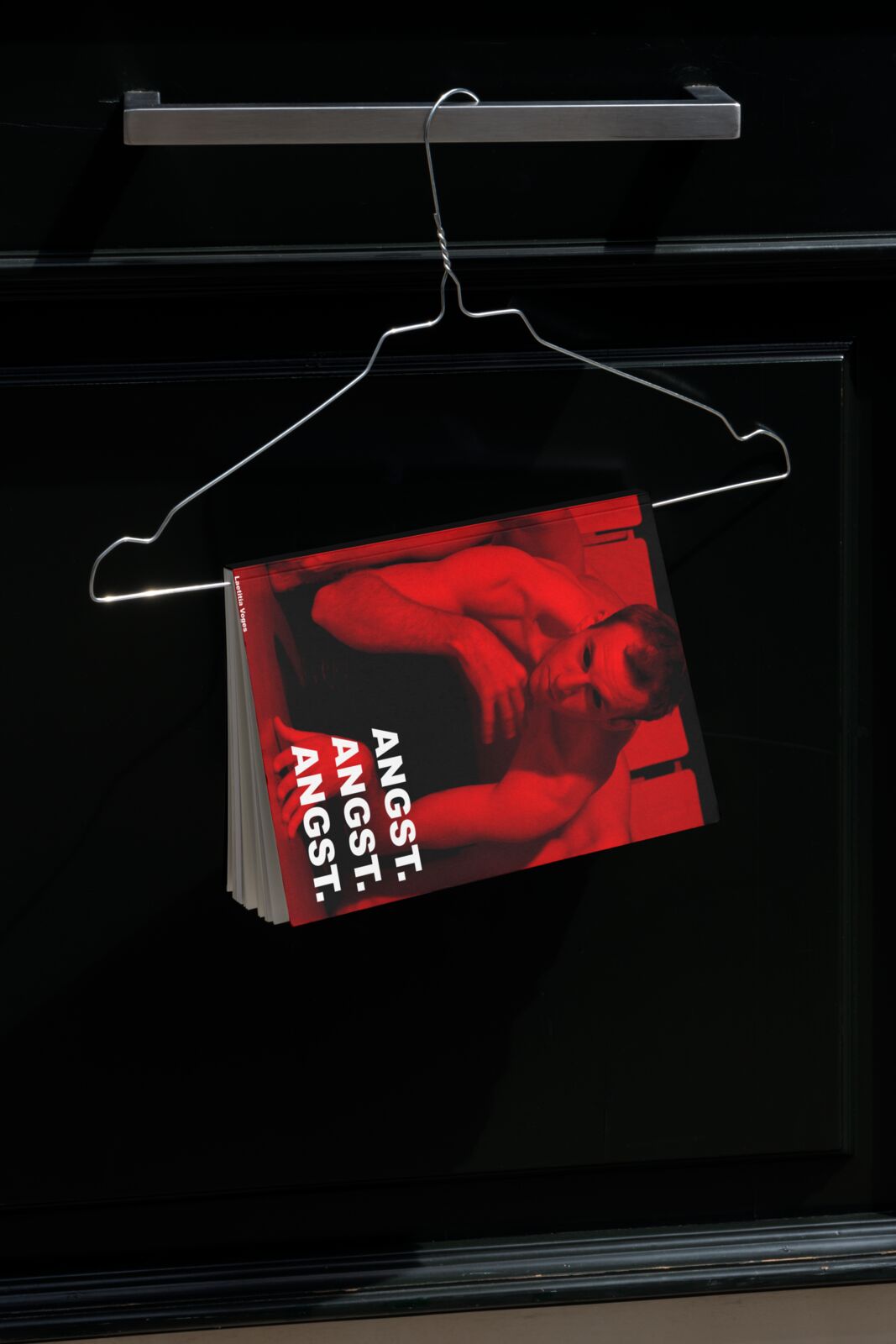
A magazine that doesn't describe anxiety. It makes you feel it.
The brief was a first-semester assignment: take a topic and make it graphic. The topic was fear. The question was not how to illustrate it, but how to make the reader feel something.
A magazine about anxiety that reads comfortably would have failed from the start. The layout had to carry the same tension as the content. That meant deliberate disruption: type that overwhelms, compositions that don't resolve, spreads that ask more than they answer.
Kapitel 01
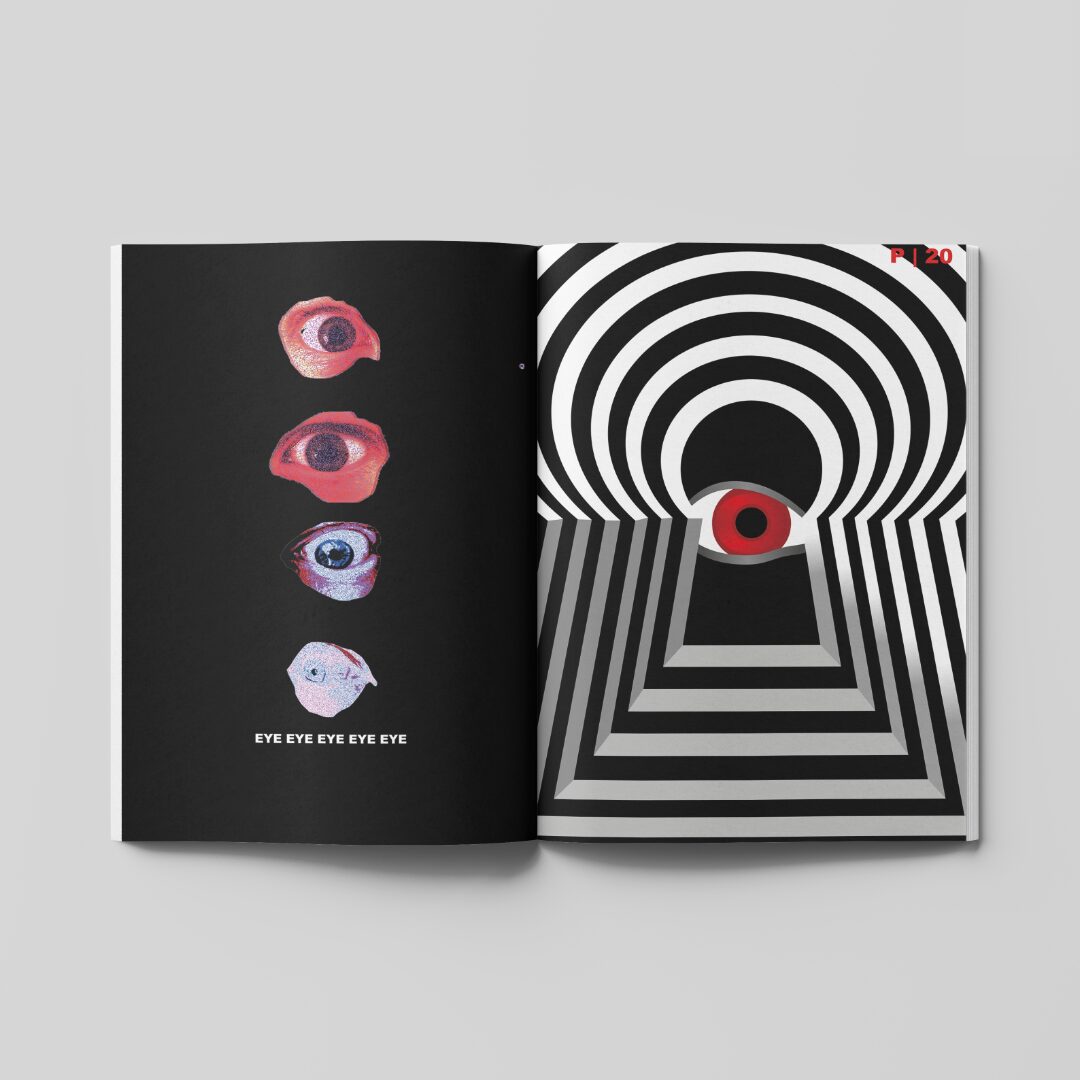
The magazine opens with photography: textures, objects, surfaces from the real world. A fence. Cracked concrete. Patterns that repeat until they unsettle. Nothing staged. The images are raw material for fear before design touches it.
From the photographs, the first visual vocabulary develops. Dot grids. Repetition. The circle as a unit that multiplies until it crowds out everything else. The chapter asks: what does fear look like before it has a name?
Kapitel 02
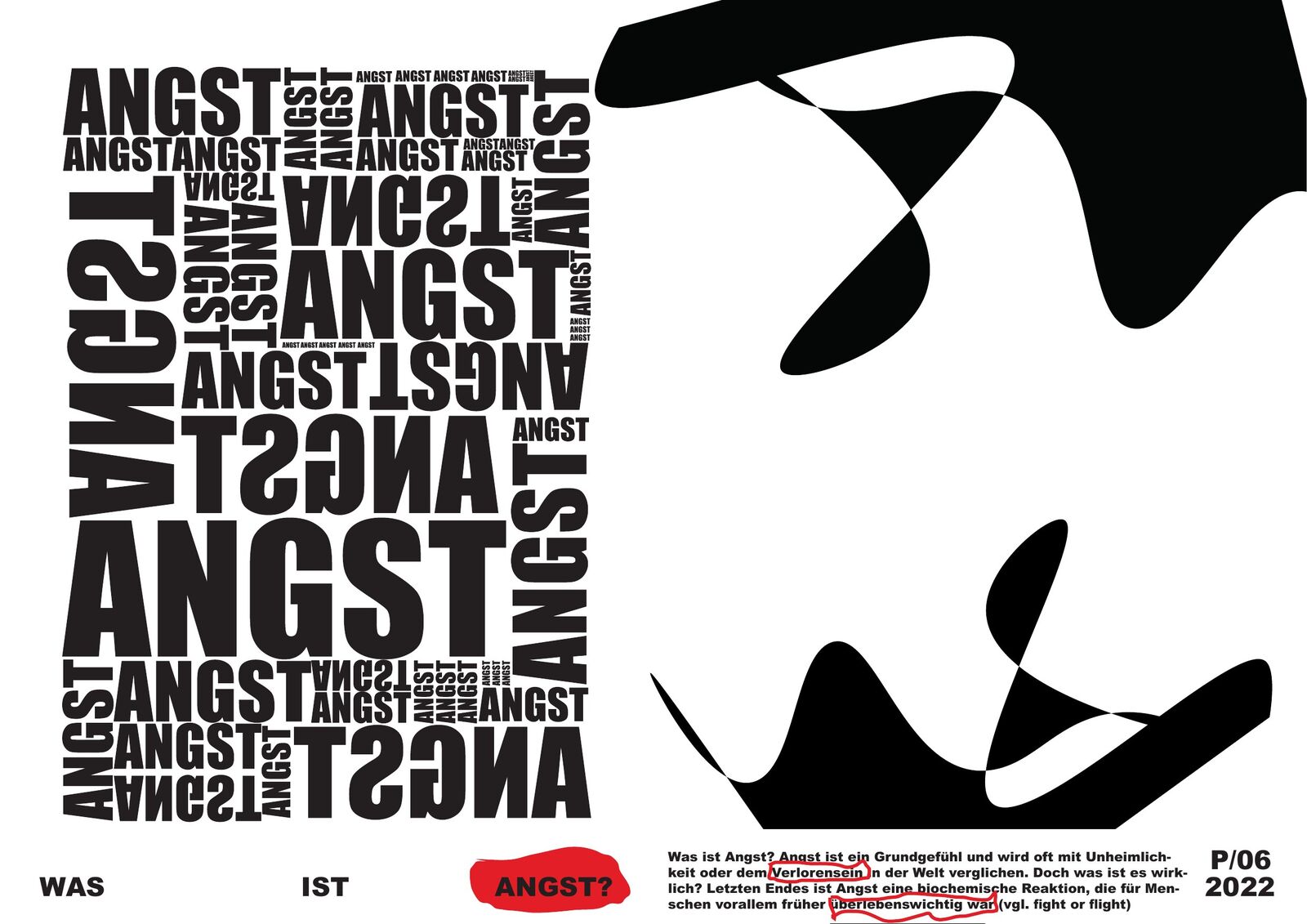
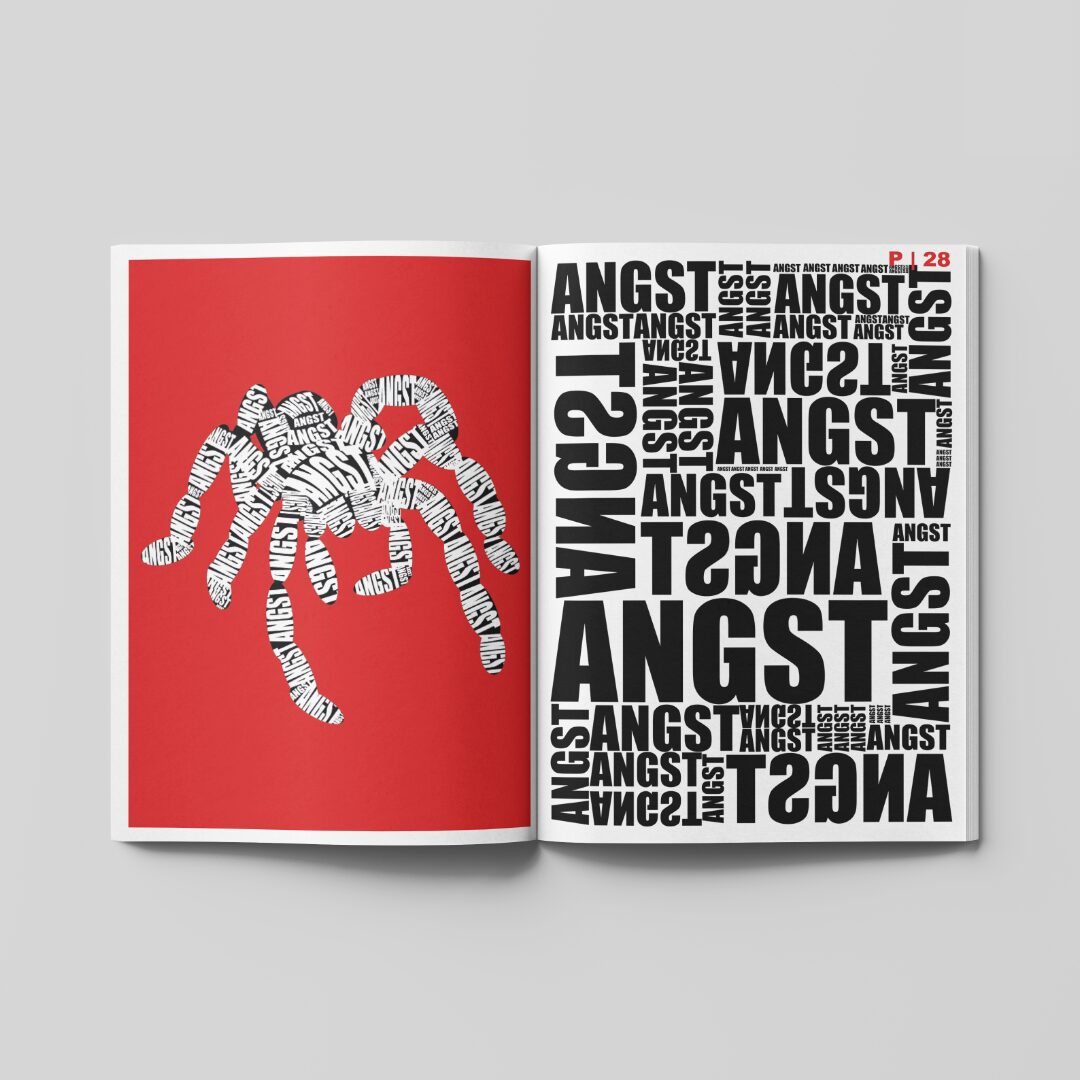
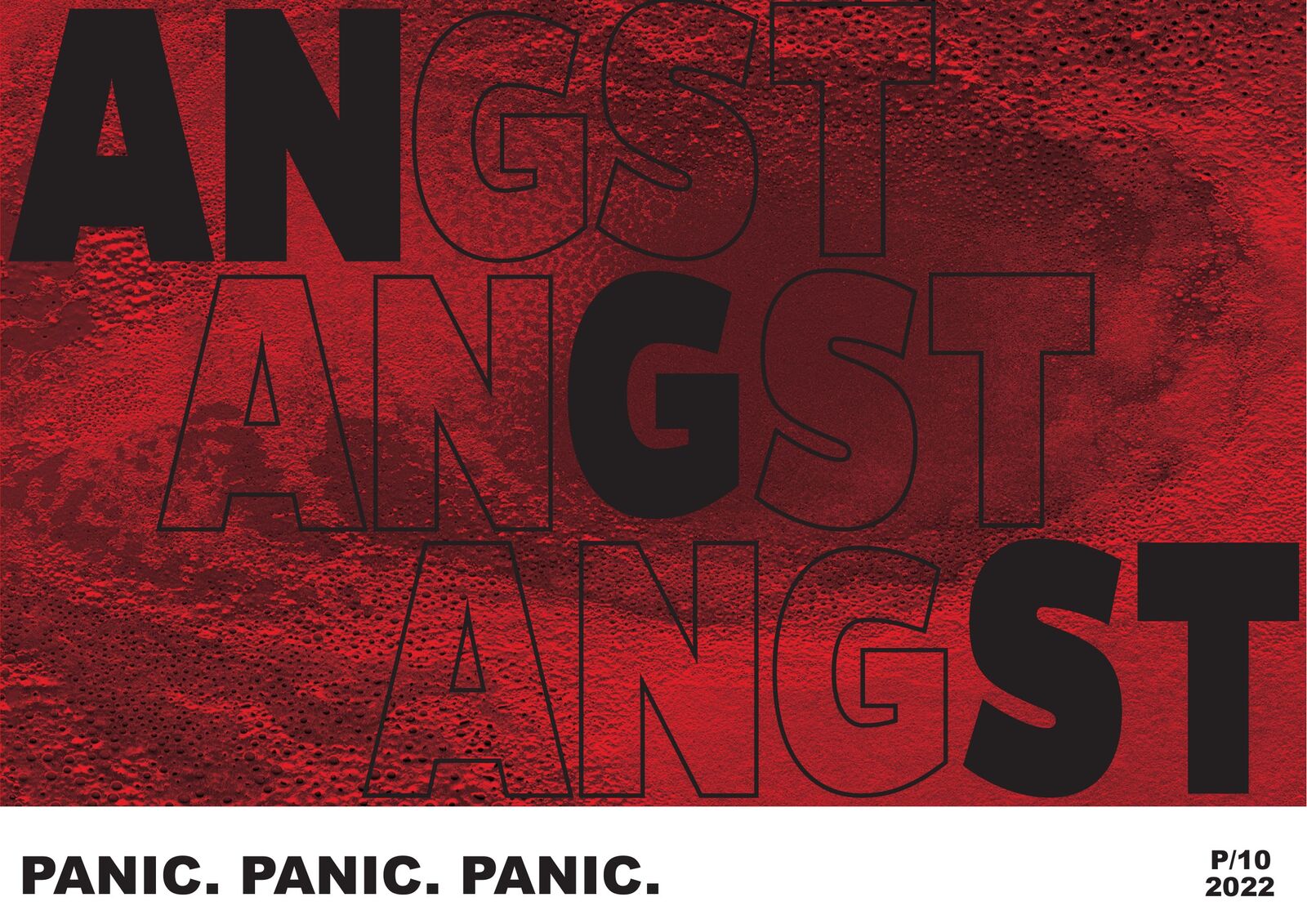
In the second chapter, language stops carrying information and starts being a graphic element. ANGST is set at every scale simultaneously. Mirrored, rotated, dense enough to form a solid mass. It becomes a spider. It becomes a wall of noise.
Type doesn't describe the feeling. It performs it. Reading becomes physically difficult in the places where anxiety spikes. The graphic logic follows the emotional one: the more overwhelming the feeling, the more overwhelming the page.
Kapitel 03
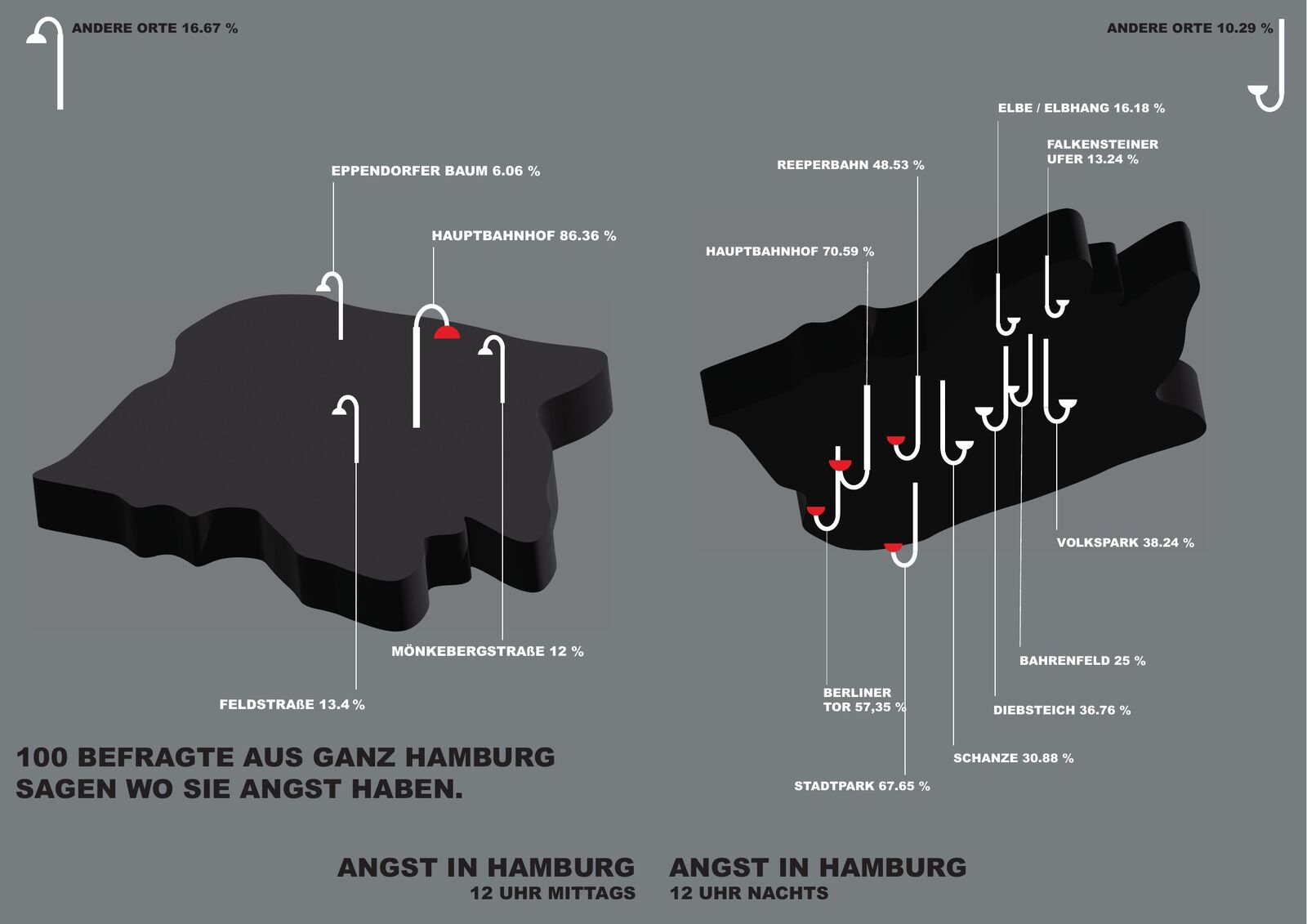
The third chapter reduces fear to its smallest marks: icons, pictograms, symbols. Then further still: numbers. A survey of 100 Hamburgers maps where people feel fear in the city — at midday, at night. The data is plotted onto a 3D model of Hamburg.
Quantifying anxiety doesn't neutralize it. Turning it into statistics makes it measurable, which is a different kind of confrontation. The infographic is the coldest chapter, and for that reason the most unsettling one.
Outcome
28 pages. Three chapters.
Scope
Concept · Art Direction · Layout · Type
Deliverables
Magazine · Infographic
Context
Grafischer Entwurf, 1. Semester
Role
Solo